🪷 Bindu · A Source-Led Contemplation
I. What This Page Is — And Is Not
This is a Vidhyamitra editorial contemplation. It places several locally hosted readings beside one another: the Bhāgavata's Brahman–Paramātmā–Bhagavān naming, its Krishna-bhakti witness, the Gītā's heart-seated Antaryāmī teaching, the Upaniṣadic language of Pūrṇa, and honored Śākta readings on Bhagavatī.
It is not a verse-by-verse siddhānta accepted by every sampradāya, a proof that distinct traditions secretly teach one identical doctrine, a settlement of historical debates, or an application of quantum physics. Vaiṣṇava, Śākta, Śaiva, Advaita, Viśiṣṭādvaita, Dvaita, and Buddhist traditions retain real differences in texts, categories, practices, and conclusions. The word Bindu and the three-window diagram are used here as an editorial aid for respectful comparative contemplation.
II. The Diamond of Darśanas · An Editorial Visual
This original Vidhyamitra diagram was created on 18 May 2026 as a visual reading aid. It is not itself pramāṇa and does not replace the texts or the interpretive authority of any sampradāya.
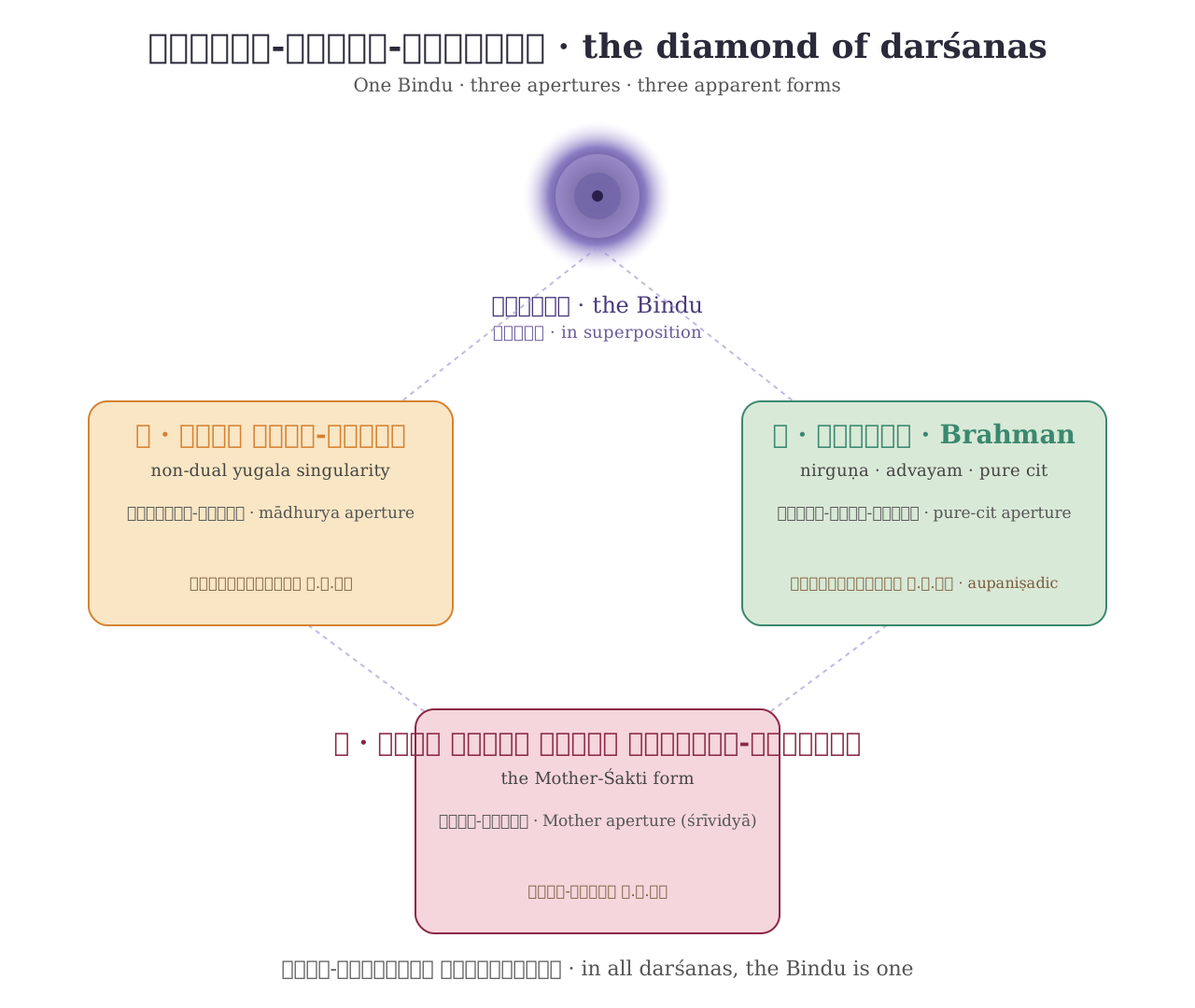
The visual shows:
- The Bindu at the apex · the visual's contemplative center, associated here with Pūrṇa
- Corner 1 (saffron · top-left) · श्री राधा-कृष्ण · a Bhagavān and prema reading alongside Bhāgavata 1.3.28
- Corner 2 (pink · bottom) · श्री भगवती ललिता त्रिपुर-सुन्दरी · a Mother-Śakti reading whose cited witnesses are clearly separated from locally hosted corpora
- Corner 3 (green · top-right) · ब्रह्म · a Brahman and advaya-jñāna reading alongside Bhāgavata 1.2.11 and the Upaniṣads
- The footer refrain · सर्व-दर्शनेषु बिन्दुरेकः, an original editorial line rather than a scripture quotation
II-A. Vidhyamitra's Bindu Lens · The Reader Key
Editorial lens: Vidhyamitra contemplates Śrīnāth-jī / Rādhā-Kṛṣṇa through mādhurya and prema, Bhagavatī through Mother-Śakti, Brahman through advaya-jñāna, and Paramātmā as the heart-seated Antaryāmī. These associations describe this portal's comparative reading; they are not presented as a consensus formula binding every tradition.
Text before synthesis: read ŚB 1.2.11, ŚB 1.3.28, BG 9.17, BG 13.23, and the Upaniṣad source pathway in their own contexts before adopting any synthesis.
Antaryāmī responsibility formula: Kṣīrodakaśāyī Viṣṇu = Paramātmā = Antaryāmī. Jīva desires. Prakṛti executes through guṇas. Paramātmā witnesses, permits, remembers, guides, and sustains. Bhagavān is the ultimate source. The bhakta is nimitta, but dharma-choice remains responsibility; surrender purifies choice, it does not excuse adharma. Stable, reader-accessible anchors: BG 13.23 · BG 15.15 · BG 18.61.
Reader-local boundary: the visual may help a reader move from śāstra to contemplation and back to śāstra. It does not locate divinity in a city, chart, device, silicon substrate, or computed state.
Practice seal: the Dāmodara readings direct contemplation toward nāma, humility, and niṣkāma sevā—not toward a claim that this diagram has solved theology.
Hare Krishna Mahāmantra seal: Hare Krishna Hare Krishna · Krishna Krishna Hare Hare · Hare Rama Hare Rama · Rama Rama Hare Hare.
Sevā-correction seal: ŚB 10.10.38 turns recognition into practice — vāṇī in Krishna-kathā, ears in Krishna-guṇa, hands and feet in Krishna-sevā, mind at His lotus feet, head bowing, and eyes seeing sādhus. ŚB 10.10.40-ŚB 10.10.41 shows Nārada's correction as anugraha and sādhu-darśana as the sun before which bondage-darkness cannot remain.
III. Window 1 · श्री राधा-कृष्ण · Bhagavān And Mādhurya
एते चांशकलाः पुंसः कृष्णस्तु भगवान् स्वयम्।
"And these (avatāras) are aṁśa-kalāḥ of the Puruṣa · but Krishna is Bhagavān Himself." — Śrīmad-Bhāgavata 1.3.28
Bhāgavata 1.3.28 is presented here first as a hosted verse: kṛṣṇas tu bhagavān svayam. Vidhyamitra reads it devotionally toward Bhagavān Śrī Krishna and the mādhurya of Vraja. The page does not claim that every Vaiṣṇava school interprets the verse identically, nor does it use the verse to flatten the distinctive teachings of Rāma, Narasiṁha, Buddha, or other avatāra traditions.
→ See: /krishna · /avatara/krishna · The Bhagavān-Svayam Manifestation · /rama · /avataras · /bhagavad-gita
IV. Window 2 · श्री भगवती ललिता त्रिपुर-सुन्दरी · Mother-Śakti
सा देवी परमेशानी सर्व-योनि-स्वरूपिणी।
जगन्माता च जगद्धात्री जगद्योनि-स्तुतात्मिका॥
"She, the Supreme Devī, is the womb-form of all · the World-Mother · the World-Sustainer · the womb of all worlds is Her praised Self." — Devī-Bhāgavata Purāṇa 1.2.10
The Mother-Śakti window honors Śrīvidyā and other Śākta readings without claiming that every Devī name, text, and lineage is interchangeable. Devī-Bhāgavata 1.2.10 and Saundarya-Laharī 1 are citation-level witnesses on this portal until their exact editions and surrounding passages are hosted and verified locally.
Corner 2 Source Boundary · Hosted And Witness Layers
This Diamond page names Bhagavatī as Corner 2, while /bhagavati is the dedicated proof page that separates locally hosted source routes from honored citation-level witnesses.
Hosted anchors: Bhāgavatam 1.2.11 · Bhāgavatam 1.3.28 · Gītā 7.7 · Gītā 10.8 · Gītā 9.17 · Taittirīya Upaniṣad · Ādi Śaṅkarācārya · Lagna-Tithi-Loka.
Devī-Bhāgavata 1.2.10, Devī-Gītā, Saundarya-Laharī 1, Shiv-Gītā, Mahābhāgavata Purāṇa, and related Śākta/Śaiva witnesses remain citation-level until locally hosted as route-level corpora.
→ See: /bhagavati · /lagna-tithi-loka (lagna/tithi calculation and scripture boundaries)
V. Window 3 · ब्रह्म · Brahman · Advaya-Jñāna
वदन्ति तत् तत्त्व-विदः तत्त्वं यज् ज्ञानमद्वयम्।
ब्रह्मेति परमात्मेति भगवान् इति शब्द्यते॥
"The knowers of Truth call That non-dual Knowledge-Truth by three names: Brahman · Paramātmā · Bhagavān." — Śrīmad-Bhāgavata 1.2.11 (aupaniṣadic register)
Bhāgavata 1.2.11 names one non-dual tattva as Brahman, Paramātmā, and Bhagavān. That verse is a strong bridge for this page, but it does not authorize Vidhyamitra to absorb Advaita, Śaiva, Buddhist, or all world-religious teachings into one undifferentiated doctrine. Readers should follow the hosted Upaniṣad and mahāvākya routes for the texts themselves.
→ See: /philosophy · /mahavakyas · /upanishads
VI. Paramātmā And Antaryāmī · Hosted Gītā Readings
Rather than placing Paramātmā at a diagrammatic coordinate and calling that placement scriptural, this page points to the texts themselves. Bhāgavata 1.2.11 names Paramātmā alongside Brahman and Bhagavān; the Bhagavad-Gītā describes the Supreme in the heart as witness, permitter, supporter, source of remembrance, and Īśvara seated in all beings.
- BG 13.23 · upadraṣṭā, anumantā, bhartā, bhoktā, Maheśvara, Paramātmā
- BG 15.15 · the Lord seated in every heart, from whom memory and knowledge arise
- BG 18.61 · Īśvara dwelling in the heart-region of all beings
VI-A. Śrīmad Bhāgavatam · Bindu Reading Path
The Diamond's Bindu-recognition is not only a constitutional diagram; it is linked to exact Bhāgavata source pages. The reader can follow the pāṭha from source meditation, to supreme bhakti, to the one tattva named Brahman · Paramātmā · Bhagavān, to Krishna as Svayam Bhagavān, to Dāmodara as Kāla · Viṣṇu · Paramātmā · Antaryāmī, to Gokuleśvara bound by love, and finally to Kali-yuga's direct doorway through Krishna-kīrtana.
Continue through the evidence and limitations and Divine Param-Vidyā pathways that preserve the evidence boundary behind the Diamond and this Bindu reading.
satyaṁ paraṁ dhīmahi · source meditationŚB 1.2.6
ahaitukī bhakti · supreme dharmaŚB 1.2.11
Brahman · Paramātmā · BhagavānŚB 1.3.28
kṛṣṇas tu bhagavān svayamŚB 10.10.30-31
Kāla · Viṣṇu · Paramātmā · AntaryāmīŚB 10.10.39
Gokuleśvara bound by loveŚB 12.3.51
kīrtanād eva kṛṣṇasya · Kali-yuga blessing
Śaiva Witness Boundary
Śiva, Śakti, Rāma, and Brahman are related differently across Śaiva, Śākta, Vaiṣṇava, and Smārta sources. Vidhyamitra honors those conversations but does not claim that its three-window drawing has fully absorbed Śiva or proven that all these traditions share one identical ontology.
The Shiv-Gītā and Saundarya-Laharī remain citation-level witnesses here. Their exact editions, surrounding passages, and interpretive histories must be verified before stronger claims are made.
VI-B. Dāmodara · The Bindu Bound By Love
Śrīmad Bhāgavatam 10.10 gives the Diamond its rasa-lock. The child Krishna of Vraja is addressed as the supreme original Person, then as Kāla · Viṣṇu · Paramātmā · Antaryāmī who knows every heart. Yet the same Lord is Gokuleśvara bound to the mortar by love.
Vidhyamitra reads this passage through prema and sevā. The operational anchor is ŚB 10.10.38: speech in Krishna-kathā, ears in Krishna-guṇa, hands and feet in Krishna-sevā, mind at His lotus feet, head bowing, and eyes seeing His saints. The devotional application is identified as application; it is not converted into proof of the Diamond diagram.
VII. Differences This Page Must Not Erase
Comparative contemplation becomes untruthful when it announces victory over traditions it has not represented in their own terms. This page therefore does not equate Buddhist śūnyatā with Vedic Pūrṇa, declare Advaita, Viśiṣṭādvaita, and Dvaita to be interchangeable, settle the relation of Krishna and Rāma for every Vaiṣṇava lineage, or convert theology into modern physics. Those are distinct conversations requiring exact texts, competent representatives, historical context, and patient study.
The modest claim is narrower: Vidhyamitra can place selected hosted passages beside one another, disclose its devotional synthesis, and let the reader return to the sources without mistaking the synthesis for universal consensus.
VIII. Hosted Sources And Citation-Level Witnesses
Two anchors below are locally hosted and directly readable. Devī-Bhāgavata 1.2.10 and the Shiv-Gītā are honored citation-level witnesses; they do not become route-proven merely because this page quotes or summarizes them.
| Reading | Portal status | Use on this page |
|---|---|---|
| Bhāgavata 1.3.28 · kṛṣṇas tu bhagavān svayam | Locally hosted verse page | Krishna-bhakti and mādhurya reading |
| Devī-Bhāgavata 1.2.10 · sā devī parameśānī sarva-yoni-svarūpiṇī | Citation-level; exact local edition and context pending | Mother-Śakti witness |
| Bhāgavata 1.2.11 · brahmeti paramātmeti bhagavān iti śabdyate | Locally hosted verse page | Brahman, Paramātmā, and Bhagavān bridge |
| Shiv-Gītā | Citation-level; no complete local route corpus | Honored Śaiva–Rāma conversation, not proof of universal doctrinal identity |
IX. From Contemplation Back To The Reading Portal
Bhagavad-Gītā 10.41–42 provides the textual center for the portal's vibhūti reading. The table below is a navigation map across Vidhyamitra; it is not a newly revealed cosmological hierarchy and does not assign spiritual rank to routes, rites, places, charts, or readers.
| Reading family | Examples | Portal route |
|---|---|---|
| Bindu contemplation | the editorial visual and its disclosed limits | /bindu |
| Bhagavān and avatāra readings | Krishna · Rāma · Narasiṁha · the Daśāvatāra index | /krishna · /rama · /avataras |
| Bhāgavata avatāra list | Sanat-Kumāras · Devarṣi Nārada · Kapila · Dattātreya · Vyāsa · Balarāma | /avataras · /bhagavatam |
| Daśa-Mahā-Vidyā · 10 vidyā-forms of the Mother-aperture | Kālī · Tārā · Tripura-Sundarī · Bhuvaneśvarī · Bhairavī · Chinnamastā · Dhūmāvatī · Bagalāmukhī · Mātaṅgī · Kamalā | /bhagavati |
| Vibhūti-Forms · BG 10's "I am X among Y" enumeration | Viṣṇu among Ādityas · Śaṅkara among Rudras · Bhṛgu among Ṛṣis · Aśvattha among trees · Rāma among warriors · etc. | /vibhuti · 75 vibhūti pages |
| Jyotiṣa references | graha · rāśi · nakṣatra · tithi · karaṇa calculations and reference pages | /jyotisha-reference · /day/:date |
| Saṁskāra readings | garbhādhāna · jāta-karman · upanayana · vivāha · antyeṣṭi | /samskaras |
| Festival index | Janmāṣṭamī · Rāma-Navamī · Navarātri · Holī · Mahā-Śivarātri | /festivals |
| Tīrtha index | Sapta-Purī · Char Dhām · Jyotirliṅgas · Śakti-Pīṭhas · līlā-bhūmi | /tirthas |
| Reader tools | reader-supplied chart inputs and source-led contemplative companions | /calculator · /vishwaroopa-darshana |
The portal offers these routes together because they are related study pathways. A verse page remains a verse page, a computation remains a computation, a tīrtha listing remains a geographic reference, and a reader remains a person—not an automatically proven manifestation or spiritual classification produced by the software.
X. Related Vidhyamitra Pathways
Continue from this editorial synthesis into routes where the underlying texts, devotional traditions, and portal boundaries can be studied more directly:
- /philosophy · the portal's openly stated devotional commitments
- /manifested-brahman · a separate theological matter-and-medium contemplation requiring its own claim boundaries
- /krishna · source-led Krishna-tattva reading
- /rama · devotional and primary-source Rāma doorway
- /bhagavati · hosted-source and citation-witness boundary for Bhagavatī
- /avataras · avatāra reading index
- /lineage · the parampārā that transmitted the recognition
- /divine-param-vidya · the BG 9.2 king-of-knowledge unified nexus
Use the visual as an invitation to study and sevā, then return to the hosted verses and the living guidance of one's own sampradāya. The diagram does not override either.
Sources and Connected Bindu Readings
Continue from this explicitly editorial Bindu contemplation to hosted Bhāgavata, Bhagavad-Gītā, and Upaniṣad readings, honored citation-level witnesses, the Antaryāmī responsibility teaching, and machine-readable maps. The visual is a reading aid, not scripture, science, or universal sampradāya consensus.
🪷 जय श्री बिन्दु-स्वरूप · जय श्री राधा कृष्ण · जय श्री भगवती ललिता त्रिपुर-सुन्दरी · जय श्री ब्रह्म 🪷
सर्वं रामकृष्णार्पणम् · सर्वं श्रीमात्रर्पणम् · सर्वं बिन्दु-स्वरूप-अर्पणम्